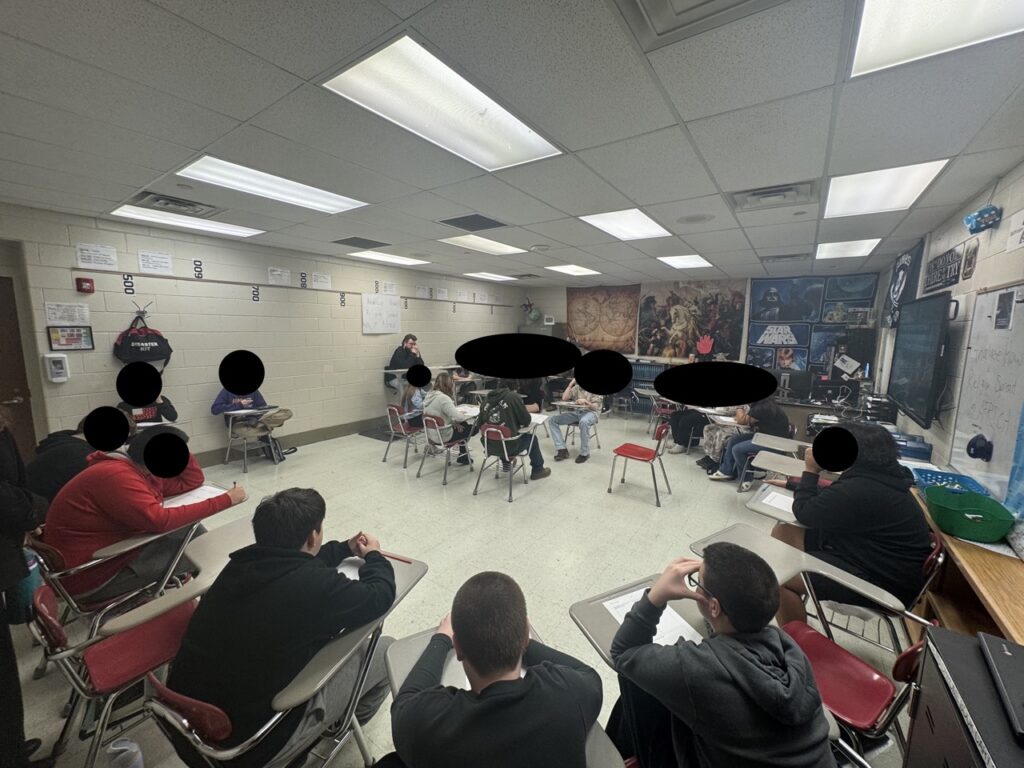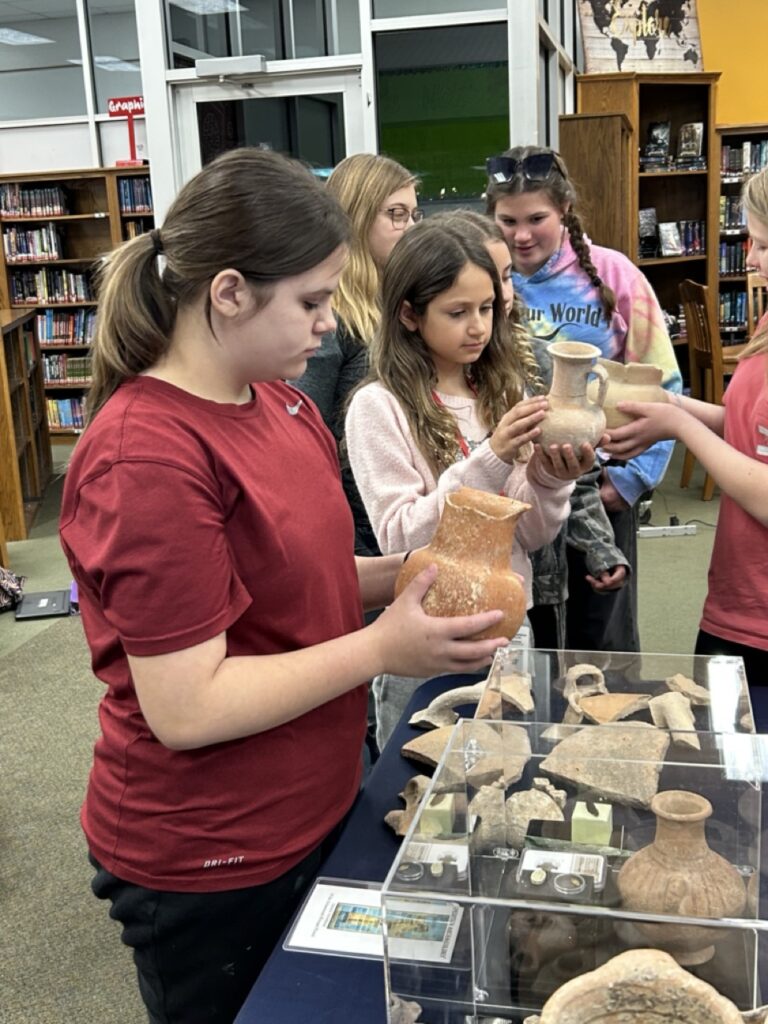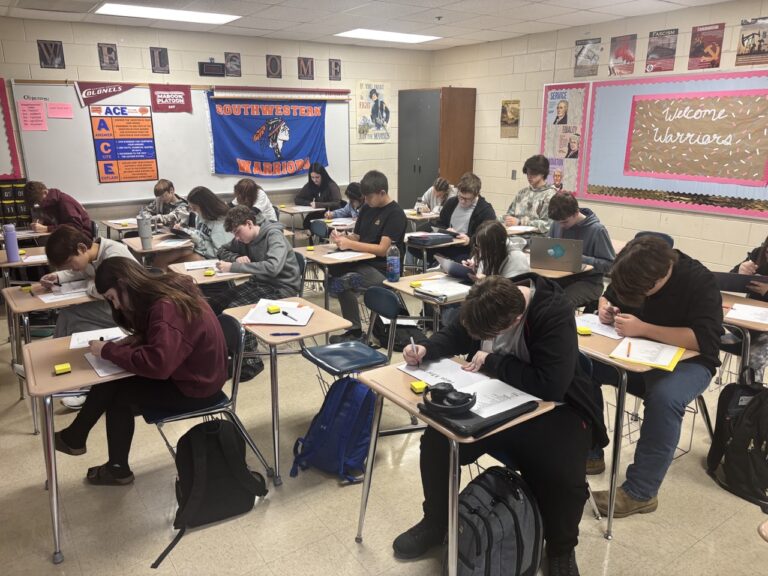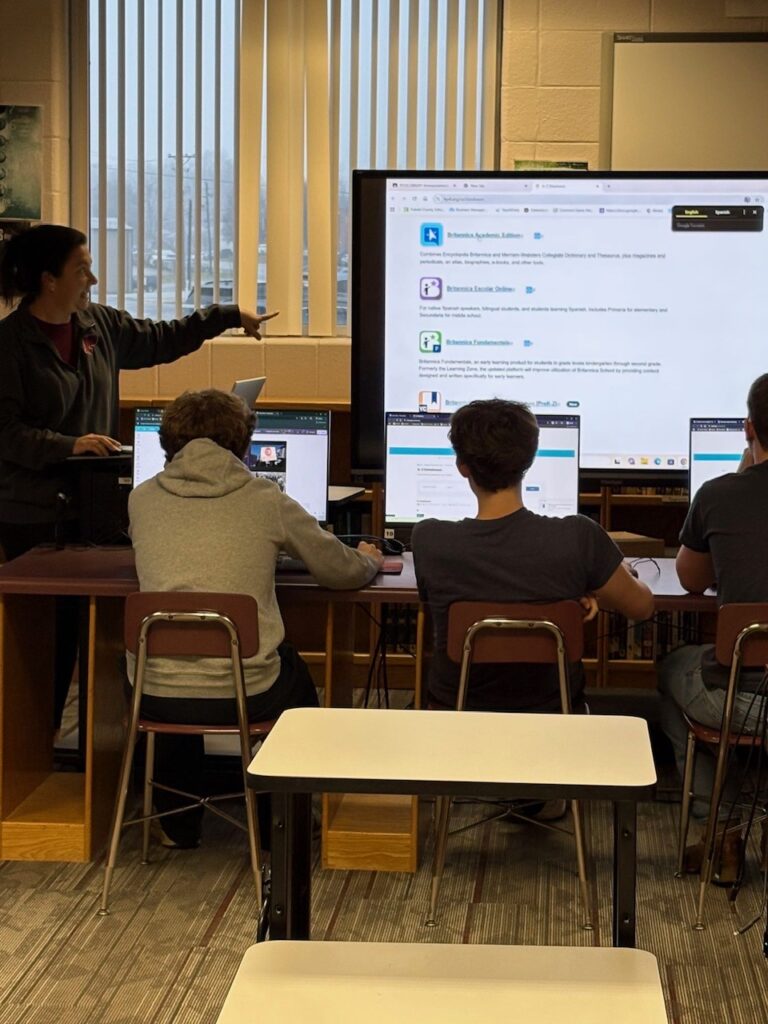
This week in Mr. Moore’s 7th Grade World Civilization class, the desks were pushed back and the “stage” was set for a high-stakes intellectual exercise. Our students debated history in our very first Fishbowl Socratic Seminar.
The challenge was no small feat. Students were tasked with exploring a complex driving question:
“How did religion and trade transform the landscape of Africa during the Middle Ages?”
To tackle this, we used a Fishbowl format. A small group of 5–6 students took their seats in the center of the room (the “fishbowl”), while the rest of the class formed an outer circle to observe, take notes, and evaluate the arguments being made.
This wasn’t your average classroom discussion. To earn points and lead their teams to victory, student “fish” had to demonstrate mastery in three key areas:
Evidence-Based Arguments: No claim was complete without a specific source or historical fact to back it up.
The Power of Sourcing: Students cited primary and secondary sources to prove their points about the Trans-Saharan trade routes and the spread of Islam and Christianity.
Collaborative Dialogue: Using “Socratic Sentence Starters” (such as “I agree with your point about Mansa Musa, but have you considered…”), students practiced the art of respectful, academic disagreement.
By stepping into the fishbowl, students are doing the real work of historians. They are learning to listen critically, synthesize different viewpoints, and speak with confidence. It was inspiring to watch our 7th graders move beyond simple “yes or no” answers and dive into the nuances of how gold, salt, and faith shaped a continent.
Samuel Moore
South Laurel Middle School
Laurel County School District
7th Grade